
Campfire meals work best when the fire is treated as part of the cooking plan, not just the backdrop. A new fire throws uneven flames and smoke; a settled bed of coals gives you steadier heat for skillets, grates and cast iron.
That changes what makes sense to cook. Choose food that can handle a little movement between hotter and cooler spots, and plan the meal around the heat the fire will actually have when you are ready to eat.
Cook Over Coals, Not Tall Flames
For most campfire cooking, a steady bed of coals is easier to manage than tall flames. Give the fire time to settle, then move the pan or grate instead of expecting one fixed spot to stay at the right temperature.
Use the Skillet Where You Can Control the Heat
Breakfast foods can brown quickly over a fire, so a skillet meal benefits from having both a hotter area and a cooler place to move the pan when needed.
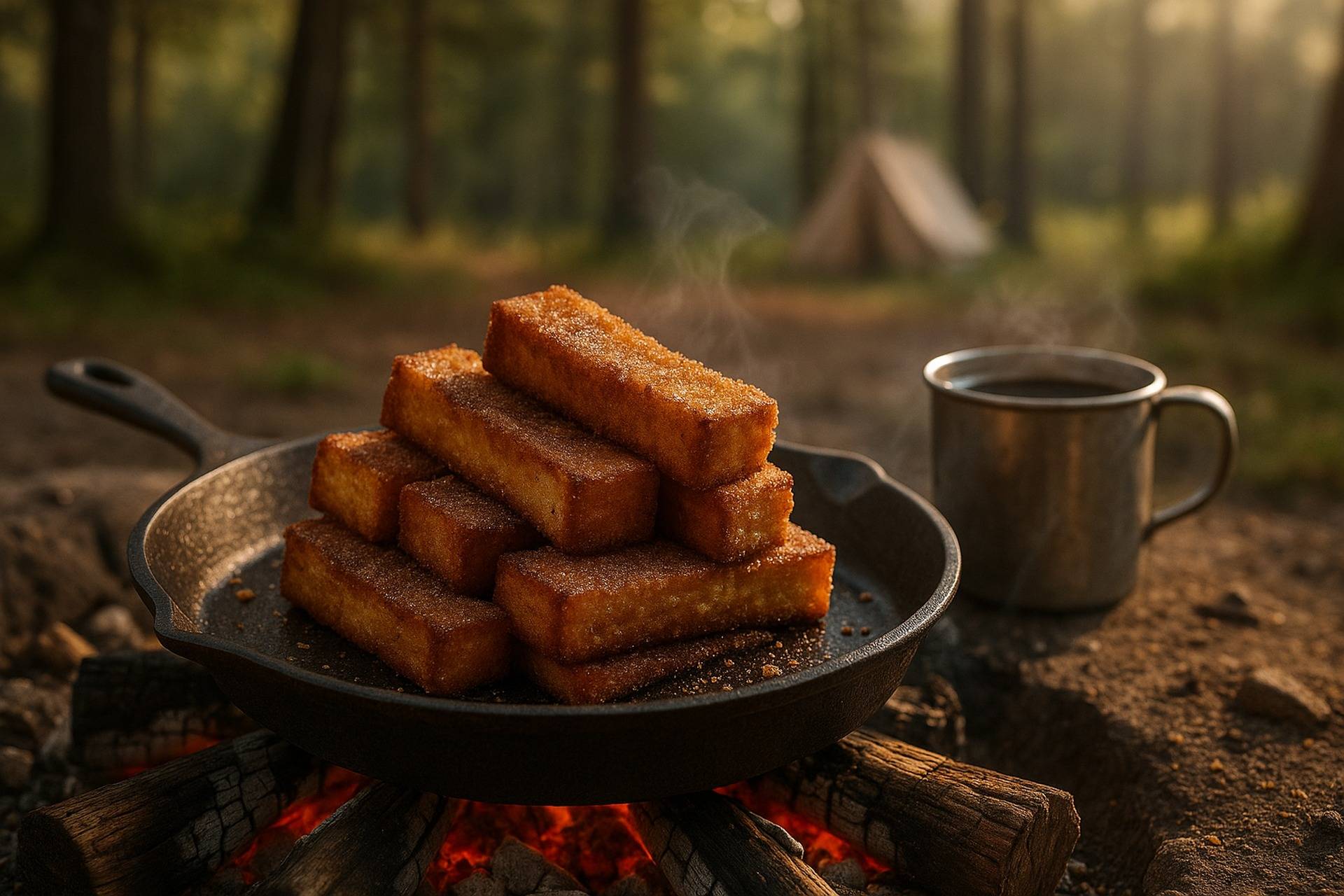
Campfire Sourdough French Toast Sticks with Cinnamon Sugar
Campfire Sourdough French Toast Sticks with Cinnamon Sugar are a good example of a breakfast that uses the fire without asking you to cook directly in the flames. The useful part is the movable skillet: brown the food, then shift away from the hottest coals when the pan gets ahead of you.
Give Hearty Skillet Meals Time Over Moderate Heat
Dense ingredients such as potatoes need more time than bread or a thin sandwich. Keep the heat moderate enough that the outside can brown while the rest of the meal cooks through.
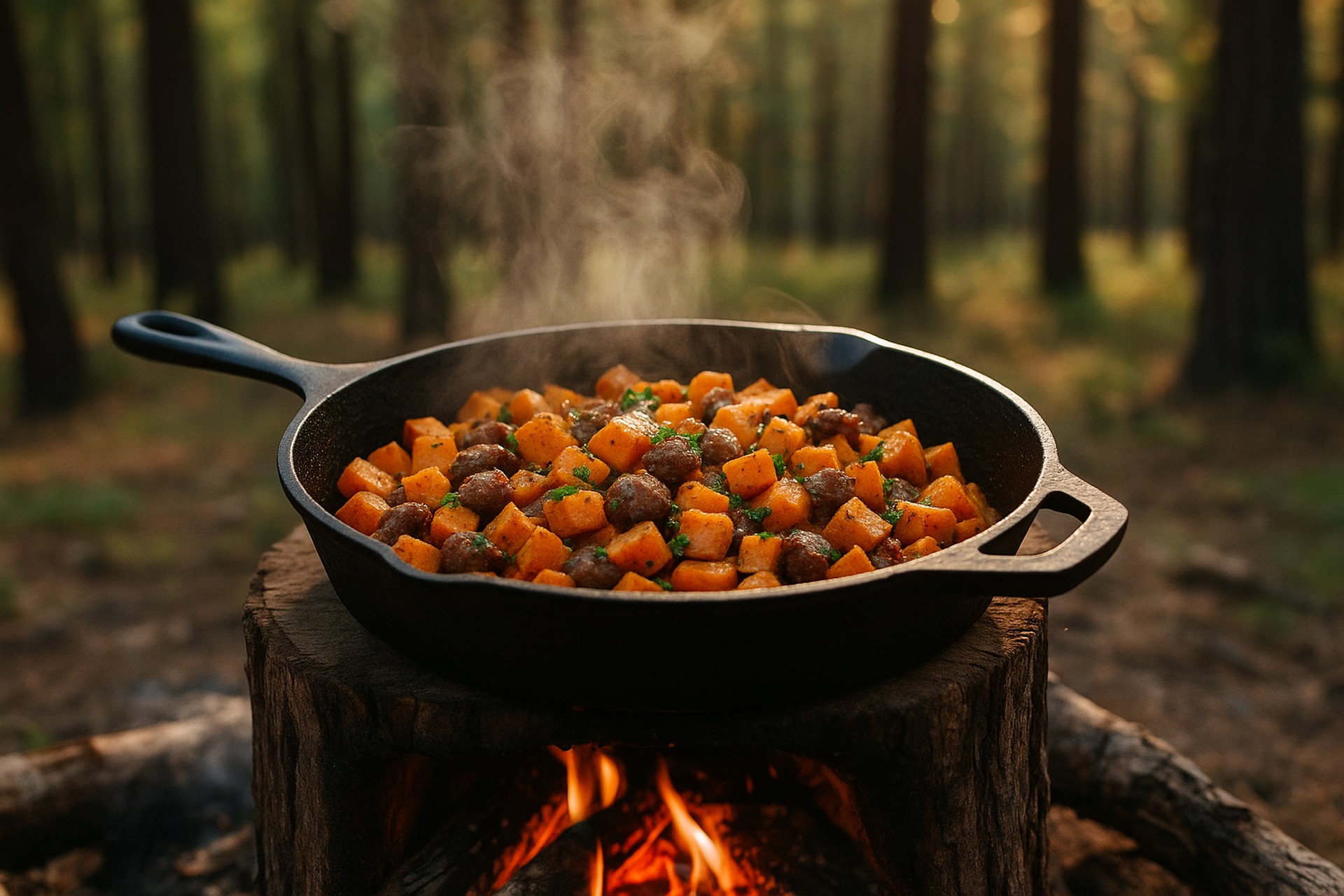
Campfire Sweet Potato & Sausage Hash
Campfire Sweet Potato & Sausage Hash fits that slower skillet approach. It is the kind of meal that benefits from a settled fire and enough time to cook without chasing high heat.
Use the Grate for Quick, Direct Cooking
A grate works well for foods that benefit from direct heat and do not need a deep pan. Keep sturdy tongs nearby and leave yourself room to move food away from a hot spot instead of letting one side scorch.
Campfire Charred Corn with Chili-Lime Butter
Recipe pictured at the top of this page.
Campfire Charred Corn with Chili-Lime Butter shows where direct fire cooking earns its place: the corn can take on color over the grate while the rest of the meal cooks elsewhere.
Keep Sandwiches Simple and Close to the Fire
Campfire sandwiches cook quickly once the grate or skillet is hot. Assemble them before they go over the heat so you are not opening packages and building lunch while the bread is already browning.
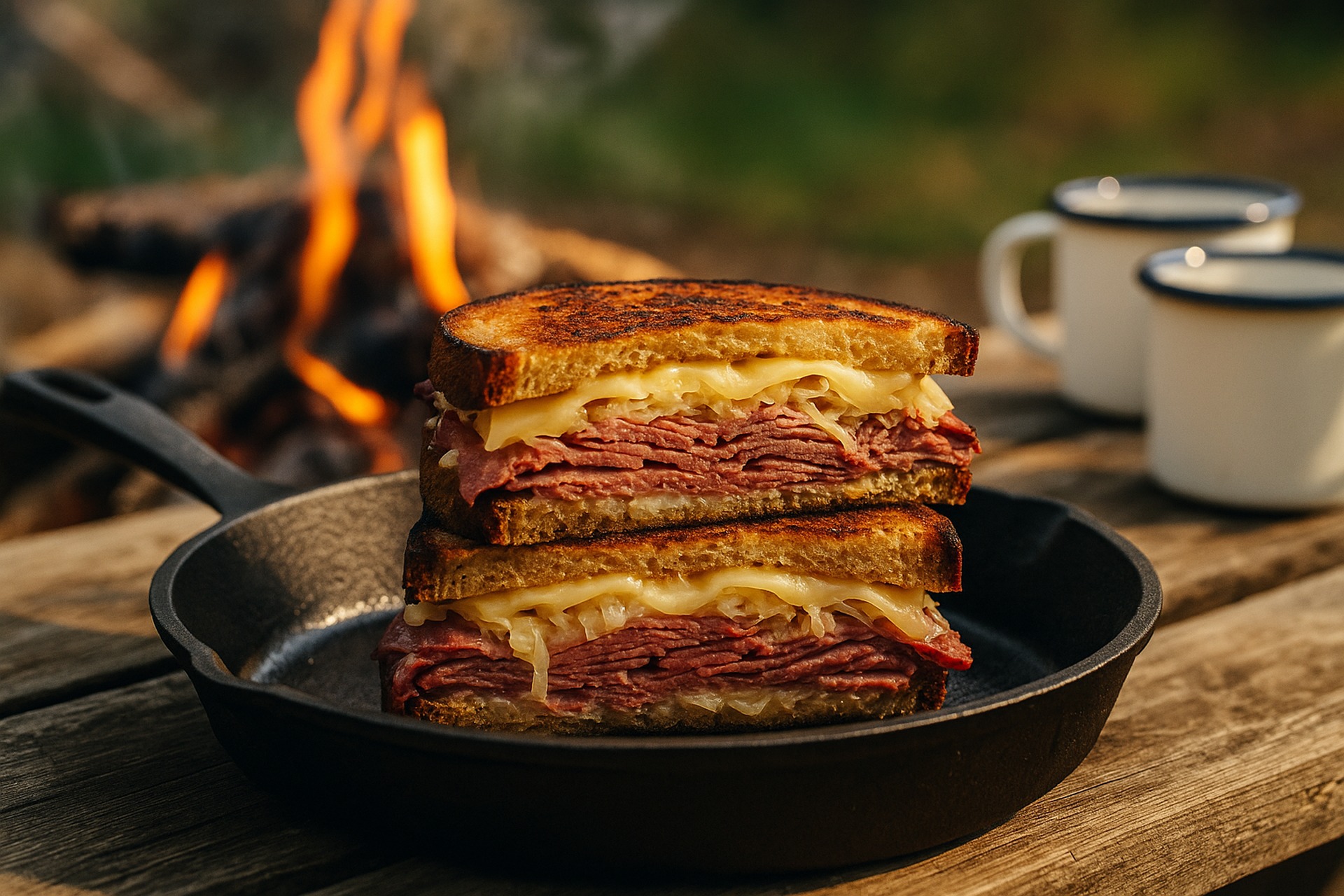
Classic Reuben Campfire Sandwiches
Classic Reuben Campfire Sandwiches use the fire for a short cooking job rather than a long one. That makes them useful when you want a hot meal without committing the whole afternoon to tending the coals.
Let Dessert Use the Fire You Already Built
If dinner already required a fire, dessert can make use of the heat that remains. Cast iron is especially useful after the flames settle because the pan can hold and spread heat while the coals do their work.
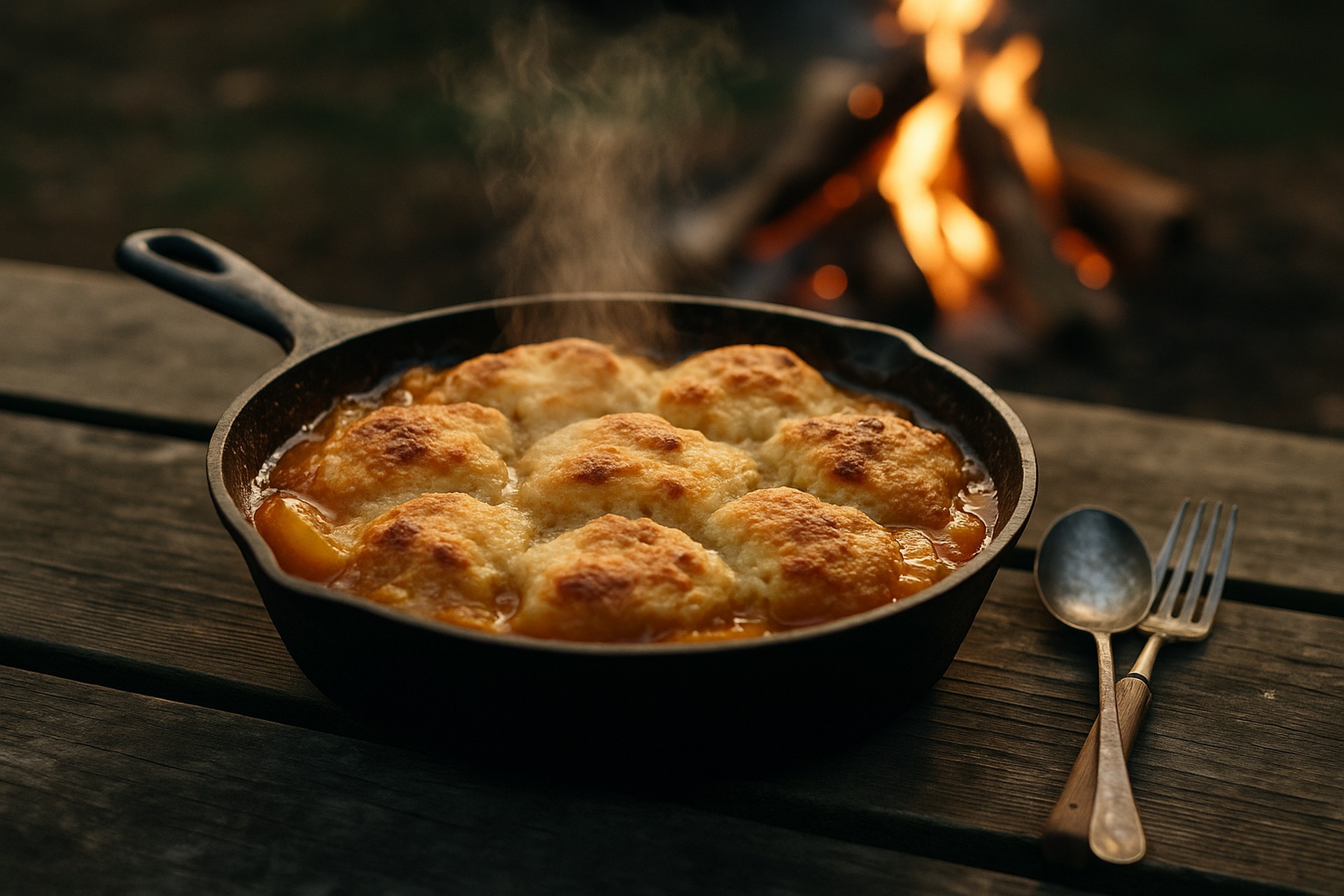
Campfire Cast Iron Peach Cobbler
Campfire Cast Iron Peach Cobbler makes sense near the end of the evening, when there is time to let a pan cook over a calmer fire instead of starting another cooking setup from scratch.
Have a Non-Fire Backup
Fire restrictions, weather or a damp fire ring can change the plan. If the meal depends on open flame, keep at least one stove or no-cook option available so dinner does not depend on conditions you cannot control.
Find More Campfire Recipes
Use the Recipe Index when you want another meal that matches your fire setup. The Camping Breakfast Recipes, Camping Dinner Recipes and Camping Dessert Recipes can help fill a specific meal slot.
Good campfire cooking is mostly heat management. Build the fire early enough to make coals, choose cookware that can move between heat zones, and let the meal fit the fire instead of forcing the fire to fit every recipe.