
When the morning fire has settled to steady coals and people are easing out of sleeping bags, Classic Campfire Bacon & Egg Sandwiches make a smoky, savory, toasted camping breakfast cooked in one skillet. The bacon provides crisp texture and cooking fat, the eggs cook quickly, and bread or muffins warm and brown without a separate toaster, so you can cook a few sandwiches and keep the camp kitchen moving as people wake up.
Why This Works at Camp
Bacon and eggs are forgiving over a campfire or on a camp stove because you can adjust the heat by moving the skillet or lowering the flame. Starting with bacon helps season the pan and gives the eggs a better surface, which means fewer stuck-on bits during cleanup. Sandwiches are also easier to serve around camp than plated breakfasts. People can eat them standing near the fire, sitting at the picnic table, or wrapping one in foil for a slow start to the morning. For camp breakfasts with a hungry group, the assembly-line approach keeps things simple: cook, toast, stack, and hand off.
Camp Setup Notes
A cast iron skillet works well for campfire cooking because it holds heat and browns the bread nicely, but a heavy nonstick pan on a camp stove also gets the job done. Keep a heat-safe plate or small pan nearby for cooked bacon so it stays out of the dirt and away from curious hands. Pack eggs in a hard-sided container in the cooler, and keep cheese or other cold add-ins chilled until you are ready to build the sandwiches. If you are cooking for more than two people, set out foil sheets, napkins, and a cutting board before the skillet gets hot. During cleanup, wipe excess grease from the pan with a paper towel before washing so the dish bin is easier to manage.
Storage and Leftovers
These sandwiches are best eaten soon after cooking, while the bacon is crisp and the bread is still warm. If you expect leftovers, store cooked bacon and eggs separately in sealed containers in the cooler rather than leaving assembled sandwiches to soften. Bread or muffins should stay in dry storage, away from cooler moisture. Reheat leftovers gently in a skillet so the bread can crisp back up instead of turning soggy. Before breaking camp, pack out any greasy foil, paper towels, or sandwich scraps so the breakfast area is clean and critters are not drawn in.
Classic Campfire Bacon & Egg Sandwiches Tips & Questions
How do I keep Classic Campfire Bacon & Egg Sandwiches from getting soggy at camp?
Toast the bread or muffins in the skillet after the bacon cooks, then build the sandwiches right before serving. If you need to hold them for a few minutes, wrap them loosely in foil instead of sealing them tight, which traps steam and softens the toasted edges.
Can I cook the bacon for Classic Campfire Bacon & Egg Sandwiches before the trip?
Yes, cooking the bacon ahead can save time on a busy morning. Chill it in the cooler in a sealed container, then warm it in the skillet before frying the eggs. You will lose some fresh-rendered bacon fat for the pan, so bring a small amount of cooking oil or butter if needed.
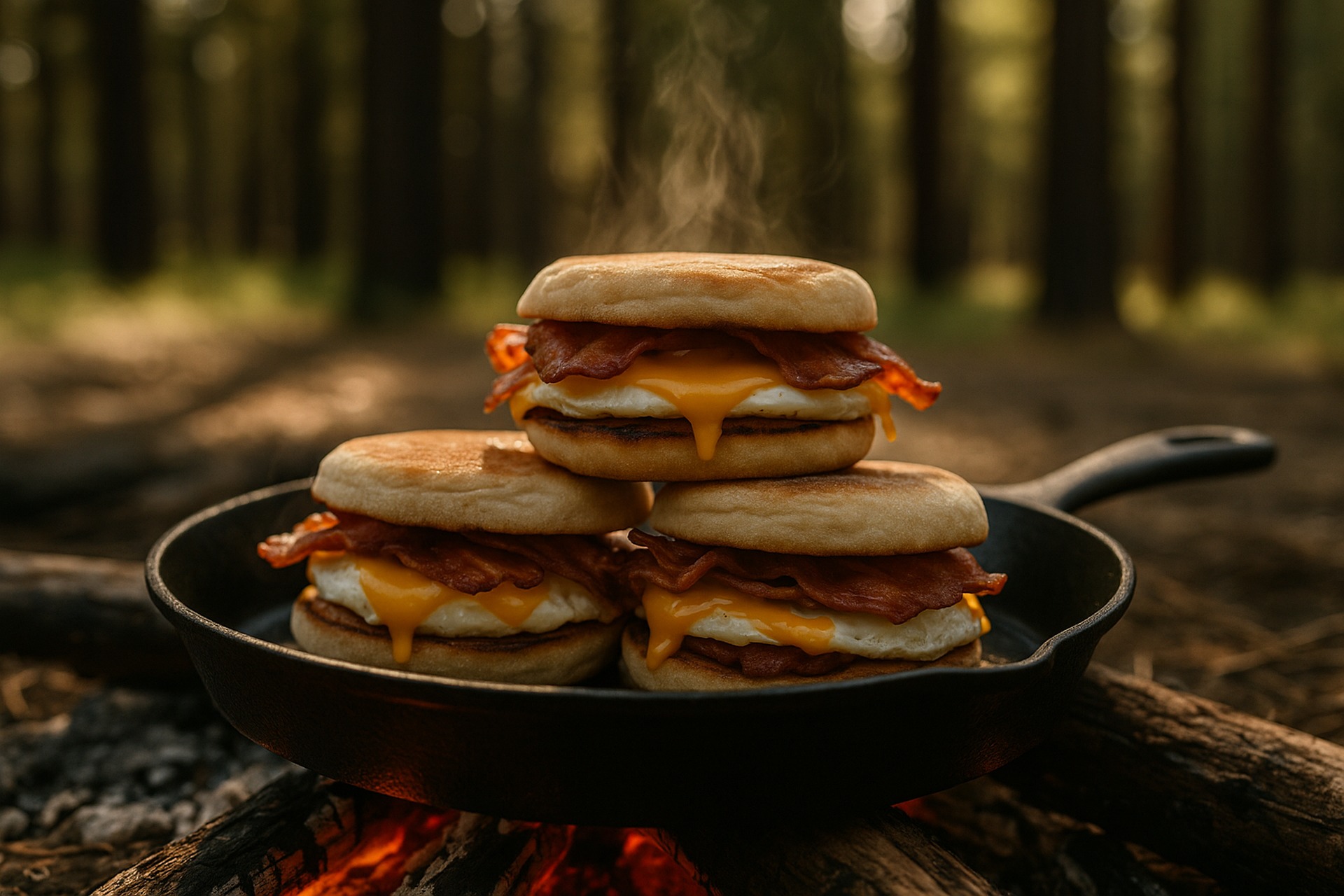
Classic Campfire Bacon & Egg Sandwiches
Equipment
- Cast iron skillet
- Spatula
- Knife
Ingredients
- 8 slices bacon
- 4 eggs large
- 4 English muffins split
- 4 slices sharp cheddar cheese
- 2 tbsp butter
- 1/4 tsp black pepper
Instructions
- Heat skillet over campfire. Fry bacon until crisp, about 6 minutes. Remove and drain on paper towels.
- Wipe out excess grease; melt butter in skillet. Crack eggs into skillet, sprinkle with black pepper, and fry to desired doneness.
- Meanwhile, toast muffin halves on edge of skillet or grill grate until golden.
- Assemble sandwiches: bottom muffin, slice of cheese, bacon, egg, top muffin. Serve hot.