Planning food for a first camping trip is easier when you think about the trip before you think about recipes. How many meals will you actually eat at camp? Which ones need to be quick? What can you prepare before leaving home?
For a first trip, a short menu is usually better than an ambitious one. Choose a few meals that use familiar ingredients, include something you can eat without cooking, and leave room for a meal or dessert that feels like part of the camping experience.
Start with the Trip, Not the Grocery List
Write down the meals you’ll need before you shop. A one-night trip may only require dinner, breakfast and a few snacks, while a two-night trip adds another full day of food. Arrival and departure times matter too. If you’re arriving after dinner or heading home before lunch, there’s no reason to pack meals you won’t be at camp to eat.
Once you know the number of meals, decide which should be cooked and which should be simple assembly or no-cook meals. That keeps the cooler and food box from filling up with ingredients that never get used.
Make the First Dinner Easy
Setting up camp often takes longer than expected, especially on a first trip. Dinner on arrival day should not depend on a long prep session or a carefully managed fire.
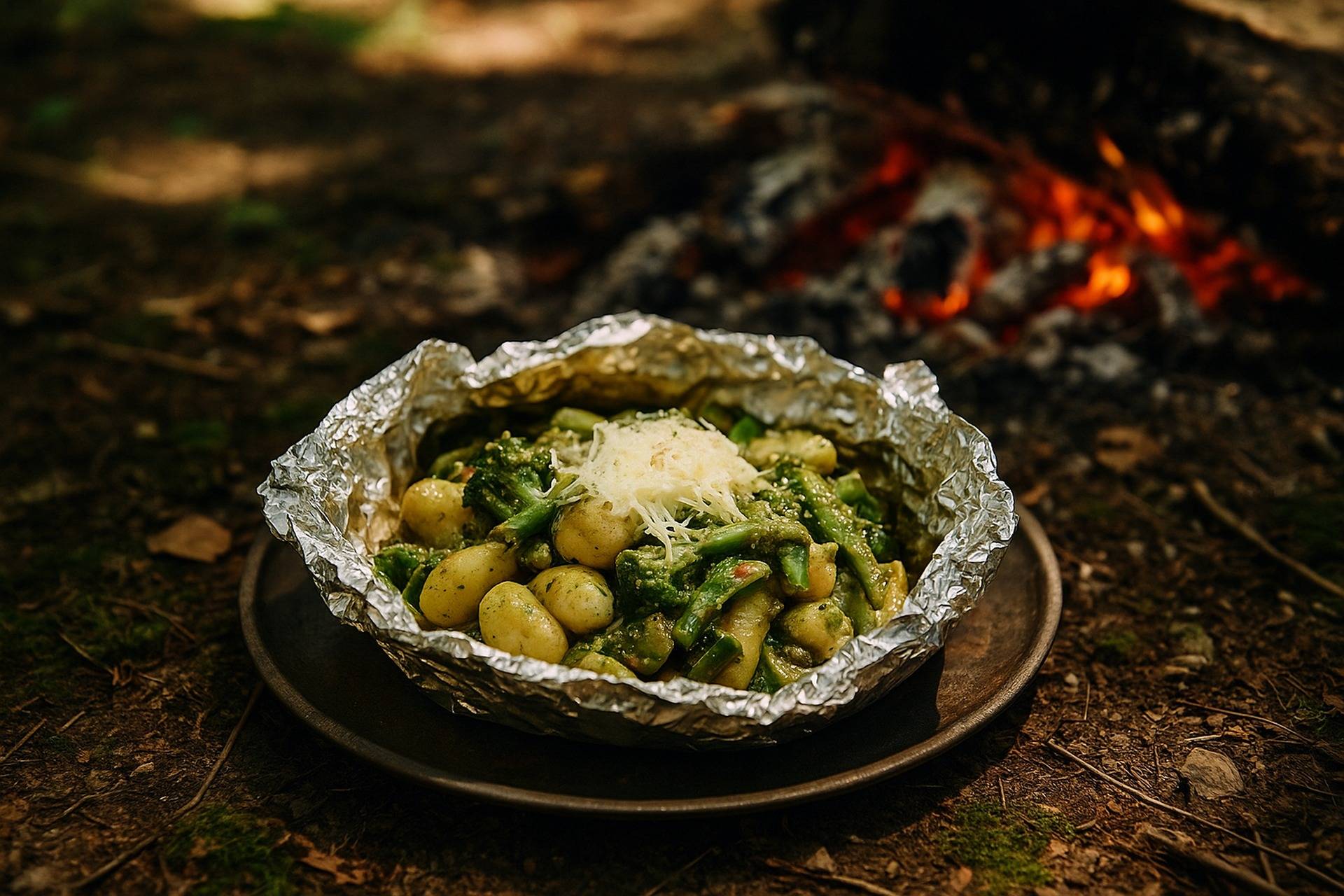
Foil Packet Pesto Gnocchi & Veggies
If the ingredients are prepared ahead, a foil-packet dinner keeps the work at camp fairly short. Just make sure the cooking method fits your campsite and fire conditions. The larger lesson is to choose an arrival meal that is mostly ready before you get there.
Keep the First Breakfast Simple
Breakfast is easier when most of the decisions were made at home. Measure dry ingredients, portion toppings and choose a meal that does not require unpacking the entire camp kitchen before you’ve had coffee.
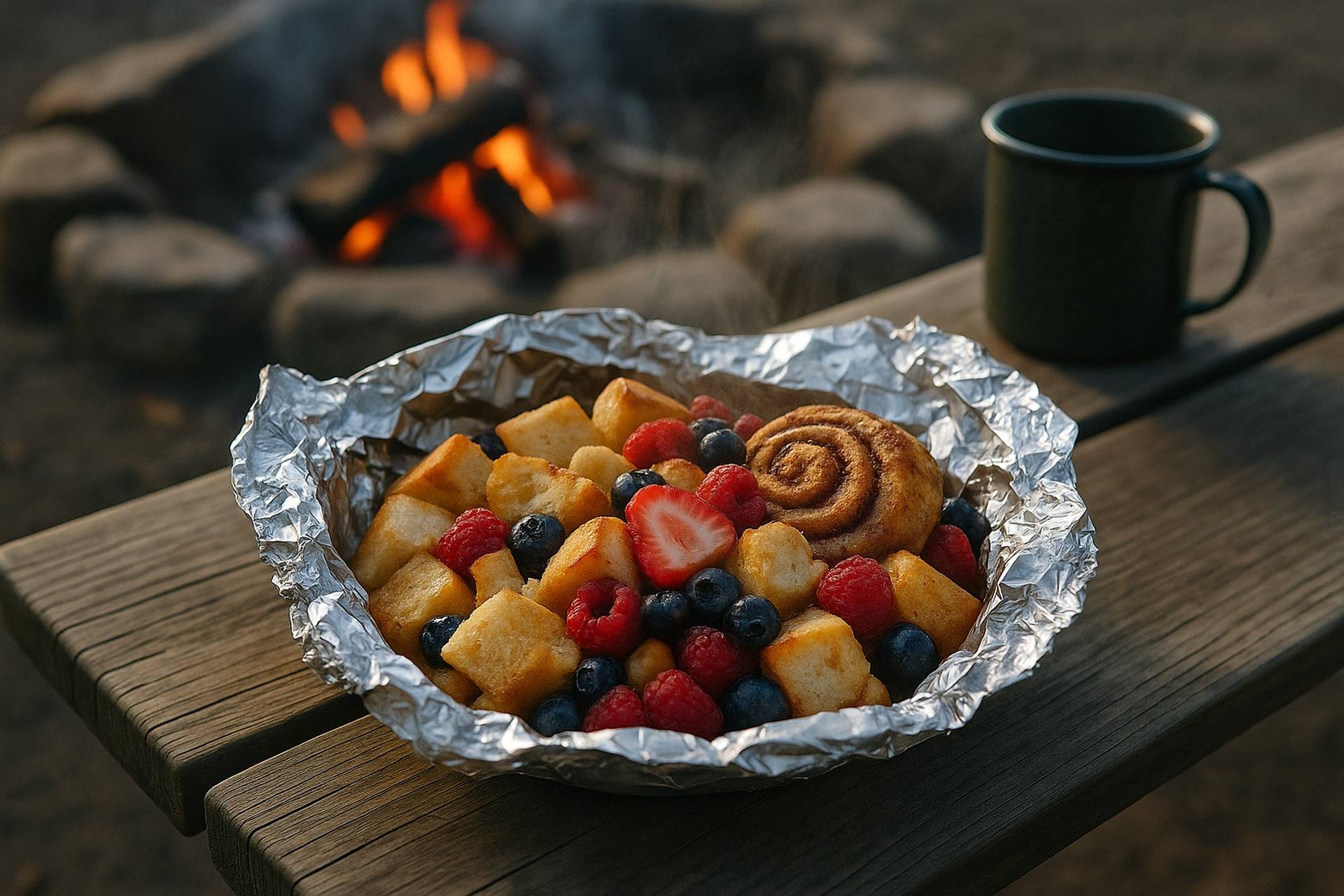
Foil Packet Cinnamon Berry Breakfast Bake
A prepared breakfast packet is one way to keep the morning organized. If you plan an early hike or an early departure, a no-cook breakfast may make even more sense.
Include a Lunch That Does Not Depend on Cooking
Lunch often lands in the middle of hiking, sightseeing or time away from the campsite. Sandwiches, wraps, salads and other cold meals give you a useful break from setting up the stove for every meal.
For a first trip, having at least one meal that can be eaten straight from the cooler or food box also gives you a backup if weather or campsite conditions change your cooking plans.
Use Home Prep to Make Camp Meals Simpler
Chop vegetables, measure seasonings and portion ingredients before you leave when it makes sense for the recipe. Pack the ingredients for each meal together so you are not searching through the cooler while something is already cooking.
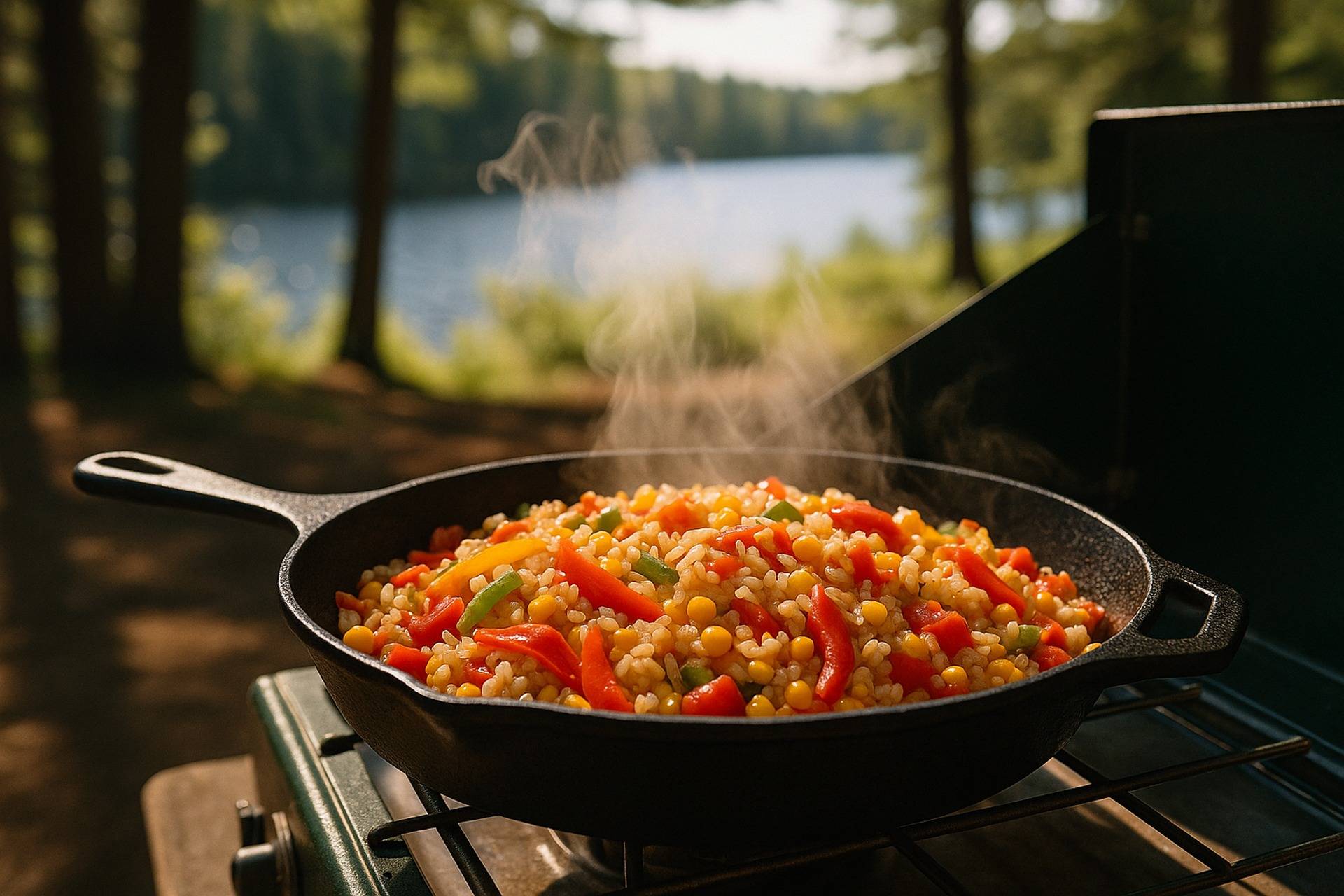
Skillet Cajun Veggie & Rice Medley
A skillet meal becomes much easier at camp when the ingredients that need advance preparation are already handled. The goal is not to cook the meal at home; it is to leave unnecessary kitchen work there.
Leave Room for Something Fun
Not everything you eat at camp needs to be chosen because it’s quick. Part of camping is enjoying food you would not normally make the same way at home. Pick one dinner, campfire snack or dessert that gives you a reason to slow down around the campsite.
The Quick Campfire S’mores Nachos pictured at the top of this page is a good example. It turns a familiar campfire treat into something everyone can share, without making every meal on the trip a project.
Recipe pictured at the top of this page.
Bring a Dessert You Can Make Ahead
A make-ahead dessert is useful when dinner already involves the stove or fire. It can stay chilled until you want it and does not create another cooking job at the end of the evening.
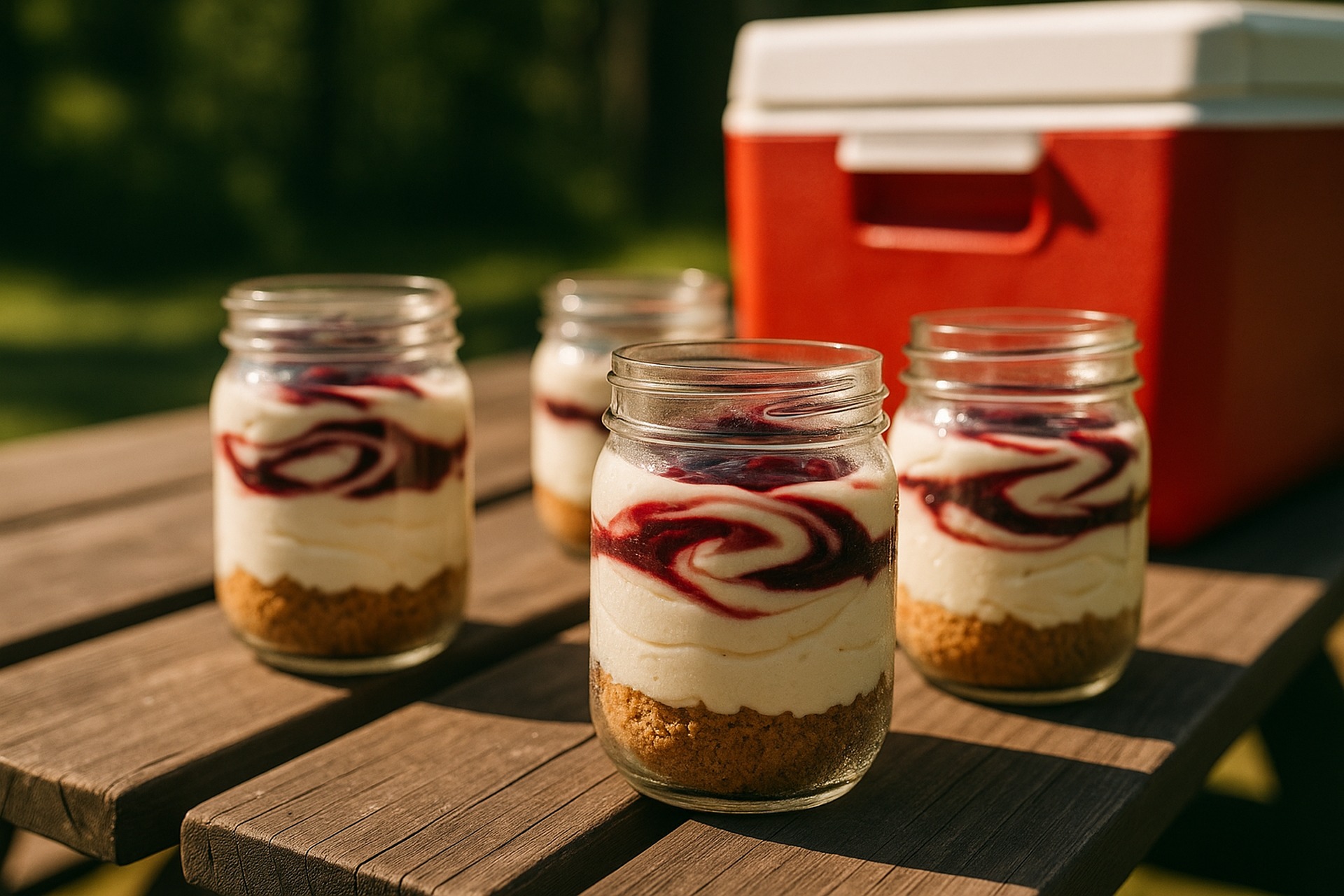
Easy Camp No-Bake Cheesecake Jars
Preparing something like this before the trip also helps spread the work out. At camp, dessert is simply waiting in the cooler.
Think in Meal Building Blocks
Before you shop, think about the kinds of food the trip needs rather than collecting recipes at random. For a short first trip, that usually means something for breakfast, a lunch or other no-cook meal, dinner ingredients, snacks, drinks, a few condiments or seasonings, and a backup meal.
You do not need a separate ingredient for every meal. Bread, tortillas, fruit, cheese, vegetables and other versatile foods can often do more than one job, which keeps the food box and cooler easier to manage.
Keep a Backup Meal in the Food Box
Bring one simple meal that does not depend on your original schedule. Weather can change, a hike can run late, or you may simply decide you do not want to cook what you planned. A shelf-stable backup can keep a small change of plans from becoming a problem.
It does not need to be exciting. The point is to have something dependable when the rest of the menu no longer fits the day.
A Simple First-Trip Approach
For a short first campout, think in roles rather than trying to build an elaborate menu: an easy arrival dinner, a manageable breakfast, a no-cook lunch, snacks you can grab during the day, one enjoyable campsite meal or treat, and a backup meal.
That is enough variety to eat well without packing ingredients for a small restaurant. After the trip, make a note of what you ate, what came home untouched and which meals felt like too much work. Your second camping menu will be easier to plan because of it.
Where to Find More Camping Recipes
Once you know the shape of your menu, use the Recipe Index to find recipes that fit each meal. You can also browse Camping Breakfast Recipes, Camping Lunch Recipes and Camping Dinner Recipes when you want ideas for a particular part of the day.
Your first camping menu doesn’t need to be ambitious. Bring food you know you’ll eat, make a few decisions before leaving home, and give yourself enough flexibility to enjoy the trip instead of managing the kitchen all weekend.